
Ingredients · 6 min read
Hyaluronic Acid: Multi-Depth Hydration Explained
Not all hyaluronic acid is equal. Molecular weight decides whether it sits on the surface or reaches the dermis, and a single-weight formula delivers only half the benefit. A senior guide to reading a hydration formula.
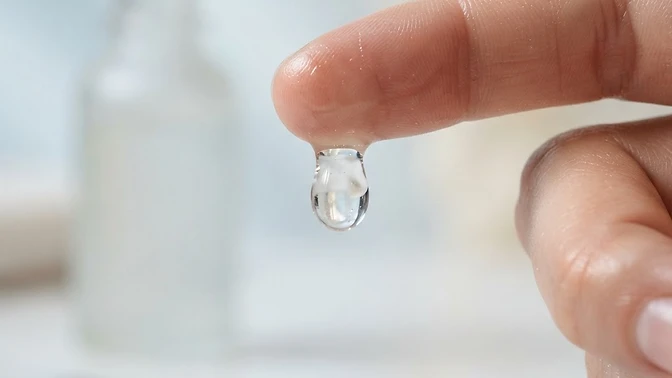
What hyaluronic acid actually is
Hyaluronic acid (HA) is a glycosaminoglycan, a long-chain sugar naturally abundant in the dermis, where it binds water and gives skin its plump, cushioned quality. A single gram holds up to six litres of water, which is why it is the most-used hydrator in clinical skincare.
But 'hyaluronic acid' on a label tells you almost nothing about performance. The decisive variable is molecular weight.
The molecular-weight question
HA is produced in chains of varying length, and chain length dictates depth of penetration:
- High molecular weight (1,000–1,400 kDa) stays on the surface, forming a breathable, non-occlusive film that smooths fine lines instantly and reduces transepidermal water loss.
- Low molecular weight (20–300 kDa) penetrates the epidermis, delivering hydrating and barrier-repairing benefits below the surface: where surface HA cannot reach.
- Micro / ultra-low HA can reach the dermis and has been shown to stimulate the skin's own HA production.
A formula containing only high-weight HA smooths but does not hydrate deeply; one containing only low-weight HA hydrates but lacks the surface film. The most effective serums combine weights for both effects simultaneously.
How to use it properly
HA needs water to bind. Apply to damp skin, then seal with a moisturiser containing ceramides and occlusives. Applied to dry skin in a dry climate, HA can paradoxically draw water out of the skin, causing tightness, the opposite of the intended effect.
Beyond HA: the hydration toolkit
For complete hydration, pair HA with glycerin (a humectant that works across humidity levels), squalane (a lightweight lipid that mimics skin sebum), and ceramides (the structural lipids that hold water in the barrier). A multi-modal hydrator outperforms any single ingredient.
FAQ
Frequently Asked Questions
Can hyaluronic acid dry out my skin?+
Yes — if applied to dry skin in a low-humidity environment. HA draws water from wherever it can; without a moisture source it can pull water out of the deeper skin, causing tightness. Always apply HA to damp skin and seal with a moisturiser.
What's the difference between HA serums?+
Molecular weight. High-weight HA sits on the surface and smooths; low-weight HA penetrates and hydrates deeply; ultra-low HA reaches the dermis and stimulates your own HA production. Single-weight formulas deliver only part of the benefit — multi-weight serums are superior.
How often should I use hyaluronic acid?+
Daily, twice daily is fine for most skin types. HA is well-tolerated and non-irritating. The limiting factor is usually the rest of your routine, not HA itself.
Is HA enough on its own to hydrate dry skin?+
No. HA is a humectant — it holds water but does not seal it in. Dry skin also needs emollients and occlusives (ceramides, squalane, lipids) to prevent that water from evaporating. Layer HA under a ceramide-rich moisturiser for true hydration.
Can I use hyaluronic acid with retinol?+
Yes — and you should. HA is an excellent buffer under retinol, adding hydration that reduces the dryness and irritation retinoids can cause. Apply HA to damp skin, then retinol, then moisturiser.