Ingredients · 11 min read
Niacinamide for Acne-Prone Skin: What the Evidence Shows
Vitamin B3 is one of the best-tolerated actives for oily, blemish-prone skin, and the evidence for its role in an acne protocol is stronger than the marketing suggests. Here is what the literature actually supports.
Why niacinamide suits acne-prone skin
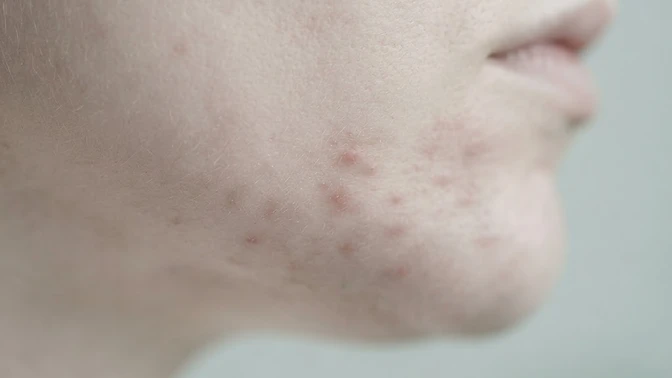
Niacinamide (vitamin B3) is one of the few actives that addresses multiple acne drivers at once: excess sebum, impaired barrier, inflammation and post-blemish pigmentation, without the irritation, photosensitivity and barrier compromise of acids and retinoids. It is the foundational active in an evidence-led acne protocol.
The four mechanisms
- Sebum regulation: reduces sebum excretion rate and casual sebum levels, with visible effect within four weeks. Less sebum means less substrate for C. acnes and less clogging.
- Barrier repair: up-regulates ceramide synthesis, reducing the transepidermal water loss that accompanies breakouts and the active treatments used to manage them.
- Anti-inflammatory: down-regulates the inflammatory cytokines active in blemish formation, reducing the erythema and swelling of active lesions.
- Anti-pigmentation: inhibits melanosome transfer from melanocytes to keratinocytes, fading the post-inflammatory hyperpigmentation that follows blemishes, particularly in darker skin tones.
The effective concentration
4–5% is the evidence-led sweet spot. Higher is not better: concentrations above 10% do not outperform 5% and increase the risk of irritation and flushing. Consistency over 8–12 weeks delivers the measurable change; niacinamide is not an overnight active.
Where it fits in the protocol
Niacinamide pairs cleanly with salicylic acid, retinoids and azelaic acid, making it an ideal supporting active rather than a standalone treatment. It is the foundation that lets stronger actives work without compromising the barrier, not a replacement for treatment, but the layer that makes a multi-active protocol tolerable.
How to choose a niacinamide serum
Read the ingredient list rather than the front of the bottle. Niacinamide should appear among the first five ingredients, which indicates a meaningful concentration, and the formula should name the percentage on the packaging. A serum that lists niacinamide ninth is a token amount.
The base matters as much as the active. Oily and breakout-prone skin does best with a water-light gel or fluid, ideally oil-free and non-comedogenic. Skin that is dry or using retinoids needs the niacinamide in a formula with glycerin, panthenol or ceramides, so the active is not arriving on an already-compromised barrier.
Be cautious with combination products. A serum that pairs 10% niacinamide with a high percentage of zinc or a strong acid is more irritating than either active alone, and the irritation is usually mistaken for the skin "purging". Separate products at sensible concentrations generally outperform aggressive all-in-ones.
A simple routine for oily, blemish-prone skin
Morning: a gentle cleanser, then a 5% niacinamide serum on dry skin, then a light oil-free moisturiser, then a broad-spectrum SPF 50. The niacinamide sits comfortably under sunscreen and does not increase photosensitivity.
Evening: cleanse, then the treatment active that suits your acne (salicylic acid two or three nights a week, or a retinoid as prescribed), applied first and left to absorb. Follow with the niacinamide serum and a barrier-supporting moisturiser.
Introduce one new product at a time and leave two weeks between additions. If your skin stings or flushes within minutes of applying niacinamide, the concentration is probably too high or the formula contains a flushing agent, and dropping to a 4–5% product usually resolves it.
Niacinamide, salicylic acid and azelaic acid
These three are frequently offered as alternatives, but they do different jobs, and an acne routine often contains all three.
- Niacinamide works on sebum, inflammation, barrier repair and the dark marks blemishes leave behind. It is the support act, safe to use twice daily.
- Salicylic acid is oil-soluble and clears congestion inside the pore. It is the treatment for blackheads and clogged texture, best used a few nights a week rather than daily for most people.
- Azelaic acid addresses both inflammation and pigmentation, and is the usual choice for rosacea-prone or pregnancy-safe routines. It is the slowest of the three to show results.
Mistakes that make niacinamide look ineffective
The most common is judging it too early: sebum starts reducing around four weeks, but tone and marks take 8–12 weeks of daily use. The second is layering it with a strong acid in the same step, which produces irritation that gets blamed on the niacinamide.
The third is treating niacinamide as a complete acne protocol. Moderate to severe acne almost always needs an additional treatment active, and persistent nodules or cystic lesions need a dermatologist rather than another serum. The fourth is skipping sunscreen: the pigmentation niacinamide is fading will simply be re-darkened by unprotected sun exposure.
What to expect, and when
- Weeks 1–2: no visible change. The barrier benefits are already happening but are not visible.
- Weeks 3–4: less midday shine and a calmer, less reactive feel after cleansing.
- Weeks 6–8: fewer new inflammatory lesions, and existing redness settling faster.
- Weeks 8–12: post-blemish marks noticeably lighter, particularly on medium and darker skin tones.
If nothing has changed after twelve weeks of consistent use at 4–5%, the limiting factor is usually another part of the routine, most often a missing treatment active or a cleanser and moisturiser that are undermining the barrier.
Buying niacinamide in South Africa
SK1N stocks niacinamide serums from the clinical brands it carries, chosen for actives at studied concentrations rather than for the number on the label. If you would rather not build the routine yourself, the acne and oil control edit groups the products by step, and a free skin consultation maps a protocol to your skin.
Every order is delivered nationwide in South Africa with a flat R150 fee, dispatched within one business day.
FAQ
Frequently Asked Questions
Can niacinamide replace my acne treatment?+
It is best used as a supporting active, not a standalone treatment. Niacinamide addresses sebum, inflammation, barrier and post-blemish pigmentation, but moderate-to-severe acne usually requires salicylic acid, retinoids or prescription agents. Niacinamide makes those treatments more tolerable and effective.
What percentage of niacinamide should I use?+
4-5% is the evidence-led concentration. Higher does not outperform it and increases the risk of irritation and flushing. Many excellent serums sit at 5%; you do not need to seek out higher percentages.
How long until niacinamide improves my skin?+
Sebum reduction is often visible within four weeks; improvements in tone, redness and post-blemish marks accrue over 8-12 weeks. Niacinamide rewards consistency, it is not a quick-fix active.
Can I use niacinamide with retinol and acids?+
Yes, and you should. Niacinamide pairs cleanly with salicylic acid, retinoids and azelaic acid, supporting the barrier so stronger actives remain tolerable. It is one of the most compatible actives in a multi-active routine.
Can I use niacinamide with vitamin C?+
Yes. The old advice that the two cancel each other out came from unstable laboratory conditions and has not held up. Niacinamide in the evening and a vitamin C serum in the morning is a sensible, well-tolerated pairing.
Will niacinamide help with my acne scars?+
It helps with post-inflammatory hyperpigmentation (the flat dark marks left after blemishes) by inhibiting melanosome transfer. It does not resurface textural or atrophic scarring, which requires retinoids, in-clinic treatments or prescription agents. For marks, it is excellent; for indented scars, see a professional.